
Breaker Rock & Base Installation in Eau Claire, WI
Heavy-duty bases for driveways, equipment access, and parking areas
A surface is only as strong as what supports it. When base material is too thin, poorly compacted, or mismatched to the load it carries, ruts form, surfaces shift, and repairs never hold. Breaker rock and properly built base layers are what allow driveways, access routes, and parking areas to handle weight, traffic, and weather without constant maintenance.
Serving West Central Wisconsin, 715 Excavating provides breaker rock and base installation services in Eau Claire, WI, and surrounding communities. We build structural base systems that support daily traffic, heavy equipment, and long-term use by controlling depth, compaction, and drainage from the ground up.
Why Property Owners Choose 715 Excavating

Load-Focused Design
Bases are built around how the area will actually be used, including vehicle weight, traffic frequency, and turning movement. This prevents premature breakdown caused by underbuilt support.

Accurate Depth and Compaction
Material is installed at the correct depth and compacted in controlled lifts to reduce settling, shifting, and surface deformation over time.

Drainage Considered From the Start
Water movement beneath the base is evaluated and managed so moisture does not weaken support or migrate into surrounding areas.

Clean, Ready-to-Use Results
When installation is complete, the base is level, stable, and immediately usable for traffic or the next construction phase.
Why Base Material Fails Over Time
Most surface failures trace back to problems beneath the top layer. Base material that is too shallow, poorly compacted, or placed over soft subgrade will move under load. Water accelerates this process by weakening support and washing fine material out of place.
Common issues include bases installed without proper depth, mixed soils that were never separated, inadequate compaction, and materials that break down under traffic. When the base fails, adding surface gravel or patching asphalt only masks the problem temporarily.
What Breaker Rock and Base Installation Involves
Subgrade Evaluation and Preparation
Every base starts with what lies underneath it.
This includes:
- Evaluating soil strength and moisture
- Removing soft or unstable material
- Shaping subgrade to proper elevation
- Establishing drainage paths beneath the base
A stable subgrade prevents settlement and supports consistent compaction.
Breaker Rock Placement and Depth Control
Breaker rock provides structural strength and load distribution.
This includes:
- Selecting rock size appropriate for traffic and load
- Placing material to required depth
- Spreading evenly to maintain grade control
- Preventing migration into subgrade soils
Correct depth ensures the base can carry vehicles, equipment, and repeated use.
Compaction and Surface Preparation
Material strength depends on compaction.
This includes:
- Compacting in controlled lifts
- Verifying firmness and stability
- Shaping final elevations and slopes
- Preparing the surface for gravel, pavement, or concrete
Proper compaction locks the base in place and extends surface life.
Where Breaker Rock Bases Are Commonly Used
Breaker rock and structural base installation are typically used for projects that require long-term durability and load support.
Common applications include:
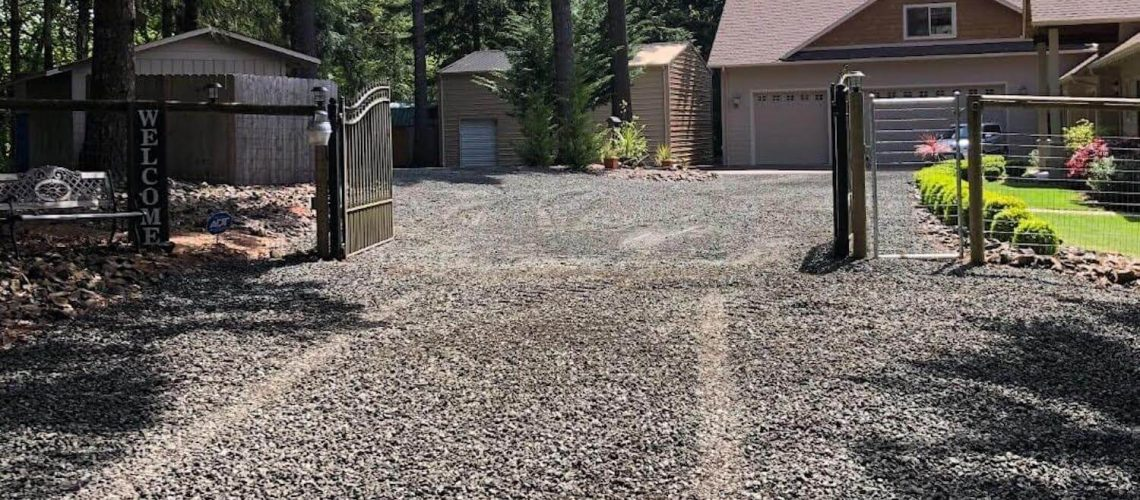
- Gravel driveways and access roads
- Equipment and service yards
- Parking areas and staging zones
- Farm and rural access routes
- Pads for shops, barns, and storage buildings
- Temporary or permanent construction access
Each application is planned based on load requirements, drainage behavior, and expected traffic.
Our Base Installation Process
Site Review
We evaluate soil conditions, access, drainage, and intended use before placing material.

Base Construction
Subgrade is prepared, breaker rock is installed to the proper depth, and the material is compacted in stages.

Finish Shaping
Final grades are shaped so surfaces drain correctly and are ready for use or the next phase.-phase work.
Service Areas
715 Excavating proudly serves the following communities in Western Wisconsin:
- Eau Claire, WI
- Chippewa Falls, WI
- Menomonie, WI
- New Auburn, WI
- Osseo, WI
- Bloomer, WI
- Cadott, WI
- Stanley, WI
- Thorp, WI
- Withee, WI
- Greenwood, WI
- Fall Creek, WI
- Augusta, WI
- Mondovi, WI
- Eleva, WI
- Colfax, WI
- Cornell, WI
- Elk Mound, WI
- Chetek, WI
- Holcombe, WI
If your project is outside these areas, call to discuss availability.
What Our Customers Are Saying
Posted on GoogleTrustindex verifies that the original source of the review is Google. Dom is easy to work with and is reasonably priced. I've used them multiple times for various projects and wouldn't hesitate to recommend them!Posted on GoogleTrustindex verifies that the original source of the review is Google. I had used 715 Rentals before so I decided to try 715 Excavating. Dom demo'd a garage for me and it went as planned. Would use the company again.Posted on GoogleTrustindex verifies that the original source of the review is Google. Had Dominic come out and refresh my gravel driveway. My house was built in the 80s and the driveway has never been refreshed. Crazy how it looks brand new! If you’re in need of this service and many others he offers for sure reach out. The guys a professional and great to work with.Posted on GoogleTrustindex verifies that the original source of the review is Google. Cheap prices and great to deal with! Won’t hesitate to deal with again! Great people
Ready to Build on a Base That Holds Up?
If your driveway, access road, or parking area keeps failing, the issue is usually beneath the surface. A properly built breaker rock base provides the strength and stability that surfaces depend on.
If you’re planning a new installation or correcting a failing one, we’re ready to review the site and explain your options.
Contact 715 Excavating to schedule your base evaluation.
Frequently Asked Questions
How thick should a breaker rock base be?
Base thickness depends on soil conditions, drainage, and traffic load. We determine depth during the site evaluation rather than using a one-size-fits-all approach.
Is breaker rock only for driveways?
No. Breaker rock is commonly used for access roads, parking areas, equipment yards, and building pads where strength and load support are required.
Can breaker rock be installed over existing gravel?
Sometimes. If the existing material is stable and properly graded, it may be incorporated. If not, unstable layers are removed before rebuilding the base.
Does base installation improve drainage?
Yes. Proper base construction helps water move through and away from surfaces instead of trapping moisture beneath them.
Will the area be usable after installation?
In most cases, yes. Once compaction is complete, the base is ready for traffic or the next phase of construction.